Keywords: mutation cancer, DNA mutation | Date: 2026-05-27
When we talked about DNA replication, I mentioned that for every billion bases copied, about one error slips through. And I said that when that accuracy breaks down, mutations occur — and in serious cases, that can lead to cancer. Today we unpack exactly what that means.
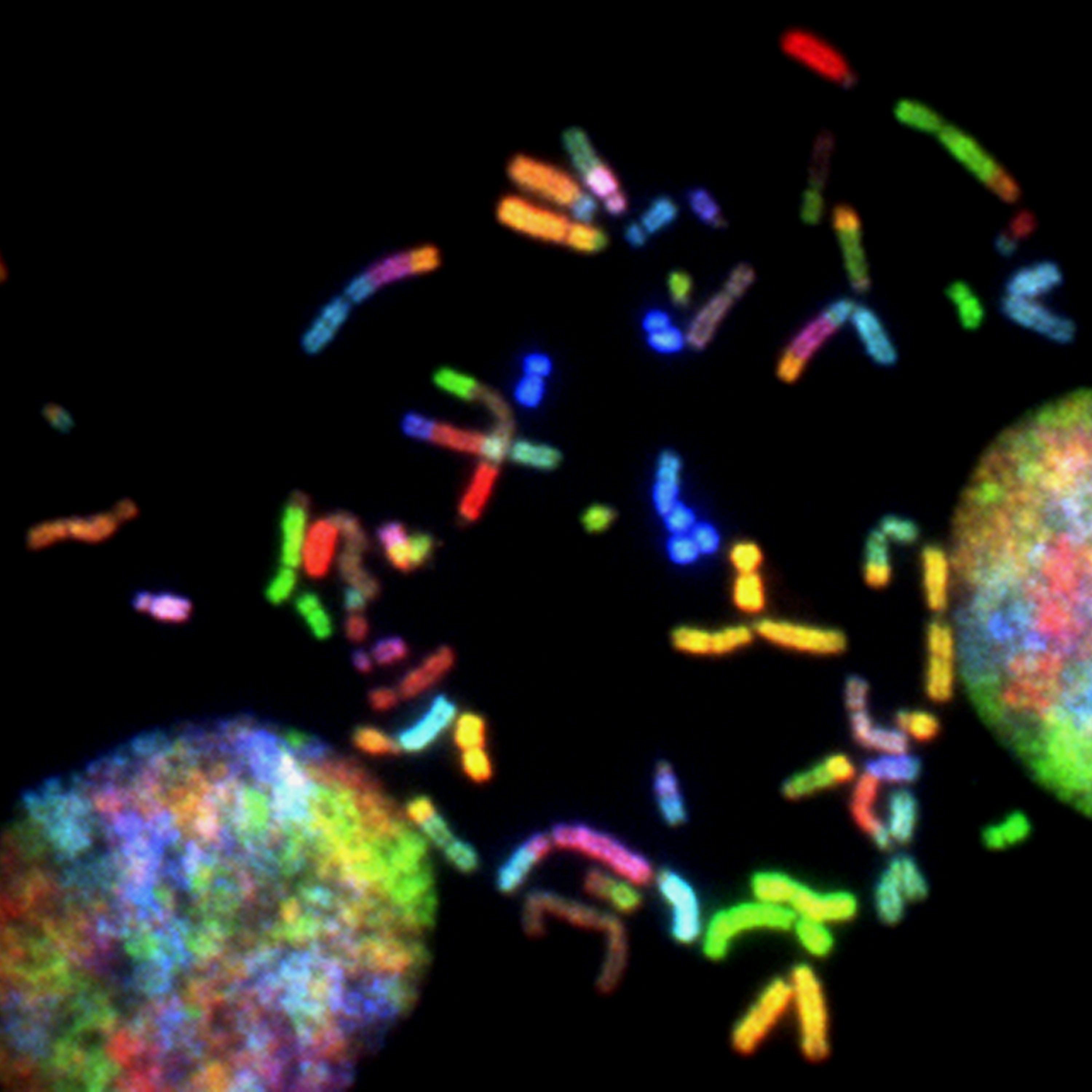
[Image: Cell microscope image (Source: Unsplash, free for commercial use)]
Mutations Start With Copying Errors
DNA replication is extraordinarily accurate, but it's not perfect. Roughly one error slips past the proofreading machinery for every billion bases copied. When that uncorrected error stays in the cell, it becomes a mutation.
A mutation is a change in the DNA sequence. The scale varies widely. It can be as small as a single base being swapped out — a tiny typo. Or it can be as large as entire chromosomal structures getting flipped, deleted, or duplicated.
Replication errors aren't the only source, either. UV radiation, chemicals in cigarette smoke, and radiation all damage DNA directly. When UV light hits skin, it causes certain DNA bases to bond incorrectly. If that damage isn't repaired properly, the error gets locked in as a mutation. A significant portion of skin cancers trace back to exactly this process.
Accelerator and Brake — The Balance of Cell Division
Cell division has an accelerator and a brake.
The accelerator is driven by genes called oncogenes. In their normal state, they promote cell division appropriately. But when a mutation breaks them, the signal never switches off — it's like the accelerator pedal stuck to the floor.
The brake is provided by tumor suppressor genes. These genes slow down cell division, or trigger damaged cells to self-destruct when needed. When a tumor suppressor mutates, the brake is gone.
In a healthy cell, these two forces are in balance. When the accelerator gets stuck, or the brake fails, cells don't stop dividing. That's where cancer begins.
One Mistake Doesn't Make a Cancer
Here's something important: a single mutation doesn't directly cause cancer.
Multiple mutations need to accumulate in the same cell. An oncogene gets activated, a tumor suppressor breaks, and a few more changes pile on top — only then does a cell fully escape control. This process usually unfolds over decades.
That's why cancer becomes more common as we age. More time means more accumulated errors. The spike in cancer rates from your 50s and 60s onward isn't a coincidence — it's the result of decades of small mistakes adding up.

[Image: Cell division microscope (Source: Unsplash, free for commercial use)]
So What Can We Actually Do?
Reducing the factors that create mutations is the core of prevention.
UV radiation — wearing sunscreen is the single most evidence-backed way to reduce skin cancer risk. Tobacco — cigarette smoke contains dozens of carcinogens, linked not just to lung cancer but to multiple cancer types. Alcohol works similarly. Diet and physical inactivity also connect to cellular damage over time.
But honestly — some of it is just luck. Replication errors happen for no external reason at all. Even in the healthiest body, a cell can accumulate the wrong mutations at the wrong time. That doesn't make prevention pointless. It means prevention is about shifting the odds in your favor, not eliminating risk entirely.
────────────────────────────────────────
When we talked about how precise DNA replication is, the natural follow-up question was: what happens when that precision fails? This is the answer. It takes decades of accumulated errors for a single cell to lose control. And reducing the rate of those errors is the most we can do.
#MutationCancer #DNAMutation #CancerBiology #TumorSuppressor #Oncogene #DNADamage #CancerPrevention #CellDivision #Genetics #BiologyBasics