The Man Who Changed Art History With an Apple — Why Cézanne Is the Father of Modern Art
Keywords: Paul Cézanne, Cézanne style | Date: 2026-05-26
When we talked about Van Gogh, I mentioned that Post-Impressionism had more than one story. There's another painter who completed that arc — someone Picasso and Matisse both called "the father of us all." That's Paul Cézanne.
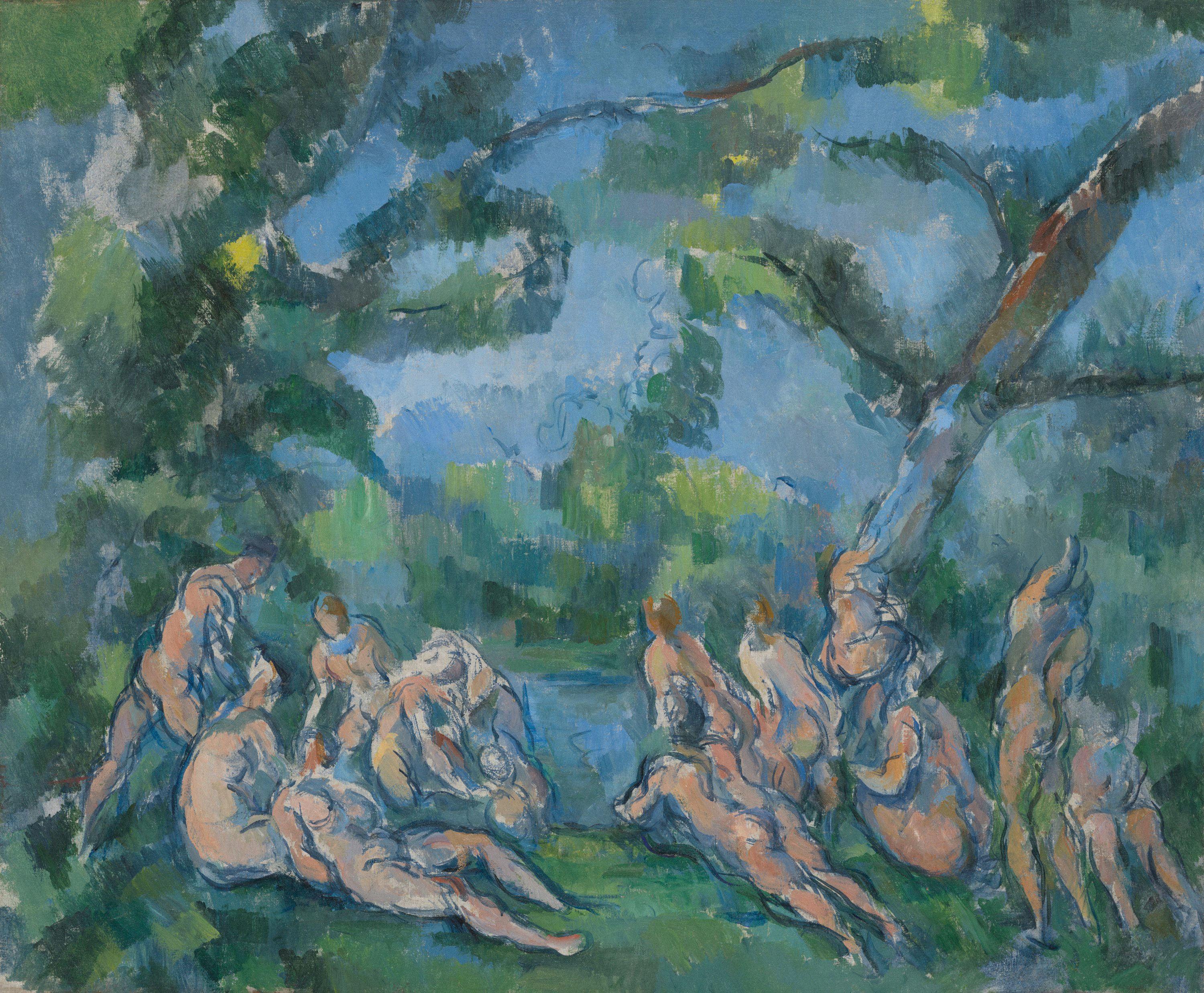
[Image: Cézanne style painting (Source: Unsplash, free for commercial use)]
One Step Beyond Impressionism
The Impressionists captured light and fleeting moments on canvas. Monet recorded the changing light on a cathedral. Renoir painted people laughing at a café terrace. It was beautiful — but for Cézanne, something was missing.
"If a painting only captures the impression of a moment, doesn't it vanish with it?" That was the question Cézanne kept asking himself.
He wanted to paint what stays constant even as the light shifts — the underlying structure of things, their essential form. While the Impressionists were heading outdoors to paint en plein air, Cézanne went back inside his studio. He painted the same apples, the same mountain, dozens of times.
"Treat Nature as Cylinders, Spheres, and Cones"
This is the most famous thing Cézanne ever said — and it's basically a summary of his entire approach.
Put an apple in front of you. Most painters see "a round red apple." Cézanne saw something else: how this object occupies space, what planes meet at what angles, how its volume exists in three dimensions. Not an apple, but a sphere.
His brushwork was just as distinctive. He built up form using small, diagonal parallel strokes — like laying colour in bricks. Step back and you see an apple. Step close and you see hundreds of small planes of colour.
That one idea changed the entire course of 20th-century art.
Three Paintings That Show You Everything — Apples, a Mountain, and Card Players
Three works define Cézanne, and each one tells a different part of the story.
Still Life with Apples — Cézanne once said, "With an apple I will astonish Paris." He wasn't wrong. Because Cézanne was the first to treat a still life not as a pretty arrangement of objects, but as a laboratory for exploring form and space.
Mont Sainte-Victoire — A mountain near his hometown of Aix-en-Provence, which Cézanne painted over sixty times. It sounds like what Monet did with Rouen Cathedral — but the purpose was different. Monet was recording light. Cézanne was researching how to build form out of colour planes. No two of those sixty paintings look the same.
The Card Players — Two men playing cards at a table. Look at the figures and you see something unusual: they've been reduced to cylinders and geometric shapes. Not faces, but volumes. Picasso reportedly studied this painting on the path to Cubism.
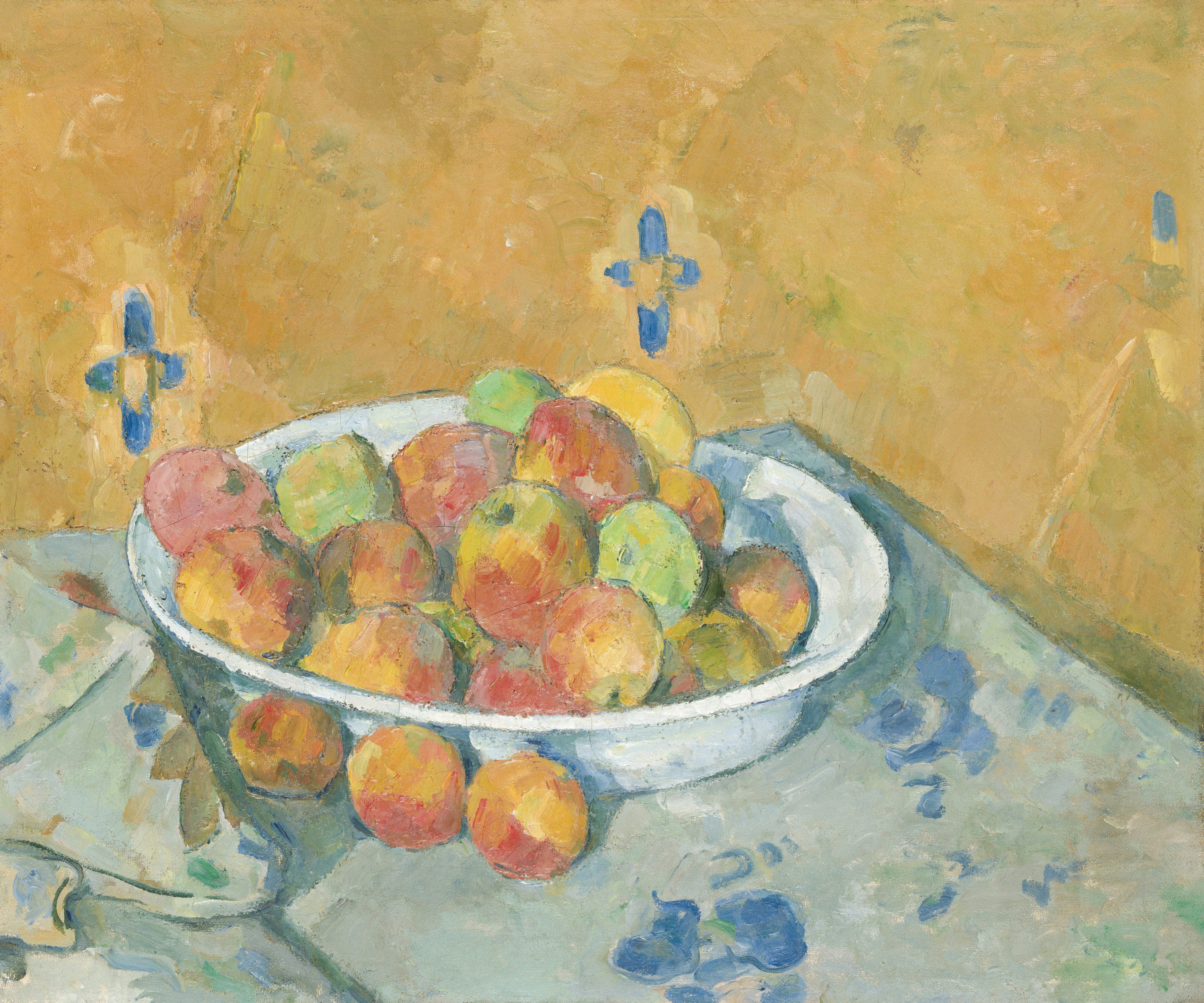
[Image: Still life with apples (Source: Unsplash, free for commercial use)]
Why Picasso Called Him "The Father of Us All"
Without Cézanne, there is no Cubism, no Fauvism, no abstract art. He was the first painter to break a rule that Western art had followed for six hundred years: that paintings should resemble reality.
Cézanne believed a painting should be a painting — not a copy of the world, but a record of how a painter analyzes and constructs their vision of it. That idea became the foundation for virtually all modern art that came after.
His own lifetime told a different story. He was rejected from the Paris Salon repeatedly, and spent long stretches working alone in his hometown. His first solo exhibition didn't happen until 1895, when he was fifty-six. He died ten years later. The retrospective held the following year stopped Paris in its tracks.
The man who stared at the same apple dozens of times changed the history of art.
────────────────────────────────────────
Van Gogh built emotion into paint. Cézanne built structure into colour planes. Both were Post-Impressionists, but they pointed in entirely different directions — and together, those two directions became the whole of 20th-century art.
#PaulCezanne #CezanneStyle #FatherOfModernArt #PostImpressionism #Cubism #Picasso #CezanneApples #MontSainteVictoire #ArtHistory #ArtFacts
'English Ver.' 카테고리의 다른 글
| $2.1 Billion Stolen in 2025 — How Crypto Gets Hacked (0) | 2026.05.28 |
|---|---|
| Why Does Cancer Happen? — The Story That Starts With DNA Mutations (0) | 2026.05.28 |
| What Does It Mean to Actually Own Bitcoin? — Wallets and Private Keys Explained (0) | 2026.05.25 |
| If Bitcoin Is Gold, What Is Ethereum? (0) | 2026.05.25 |
| The Man Who Built Emotion into Paint — Van Gogh and Post-Impressionism (0) | 2026.05.25 |