Bitcoin has been drifting near the $70,000 mark for months. It wasn't long ago that it was hitting all-time highs, yet something seems to be holding it back. Whether this is a signal that the bull market is over — or something else entirely — isn't easy to read from the price alone.
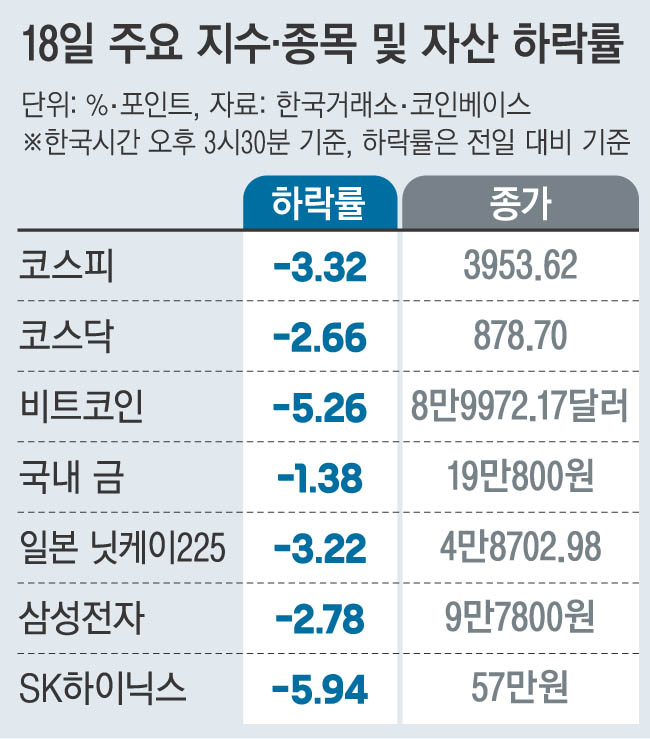
[Image: Bitcoin market overview (Source: The Kyunghyang Shinmun)]
US Treasury Yields Just Hit a 20-Year High
To understand where Bitcoin is right now, you need to look at US Treasury yields before you look at crypto charts. In May 2026, the 30-year Treasury yield crossed 5.2% — the highest level in two decades.
Here's why that matters. If you can lock in a stable 5%-plus return by buying US Treasuries, the case for holding volatile assets like Bitcoin gets weaker. Capital naturally rotates out of risk assets and into bonds. That's the mechanism at work.
In May alone, US spot Bitcoin ETFs saw $2.9 billion in net outflows — the largest single-month withdrawal of 2026. This isn't just Bitcoin "cooling off." It's capital moving in response to a changed rate environment.
What Changed After the ETFs Arrived
Since spot Bitcoin ETFs were approved in 2024, something has quietly shifted in how Bitcoin trades. With institutional money flowing in at scale, Bitcoin started moving in sync with the Nasdaq and S&P 500 far more closely than before.
There used to be a common argument that Bitcoin was an uncorrelated asset — that it moved independently of interest rates and stock markets. That's no longer quite true. When the Fed signals possible rate hikes, Bitcoin falls. When the dollar strengthens, Bitcoin gets pushed down.
The assumption was that institutional involvement would stabilize the price. The reality is that it made Bitcoin more sensitive to macroeconomic shocks. The ETF effectively plugged Bitcoin into Wall Street.

[Image: Bitcoin ETF trading floor (Source: The Kyunghyang Shinmun)]
The Bull Market Isn't Over
So is this the end of the bull run? Analysts are split. Arthur Hayes argues that the Fed will eventually have no choice but to cut rates — and when that happens, Bitcoin will push toward $125,000 by December 2026. Peter Brandt, on the other hand, warns that Bitcoin could revisit the $40,000–60,000 range before any sustained recovery.
Both could be right in sequence. The current sideways action isn't a sign that the bull market is over — it's a sign that the macroeconomic backdrop is unresolved. Until the direction of interest rates becomes clearer, Bitcoin doesn't have a clear direction either.
Watching Bitcoin now means watching more than just crypto charts. US Treasury yields, the dollar index, Nasdaq momentum — these three are often the first signals of where Bitcoin is headed next. With crypto now wired into the broader financial system, understanding macro is no longer optional.
#BitcoinOutlook #BitcoinMacro #CryptoMacro #BitcoinETF #USTreasuryYields #Bitcoin2026 #BullMarket #FedRates #CryptoInvesting #BitcoinAnalysis