Most first-time visitors to Lisbon head straight for the famous landmarks — the Belém Tower, the Jerónimos Monastery. But the real Lisbon isn't there. The moment you turn into one of the old uphill alleys, a completely different city opens up.

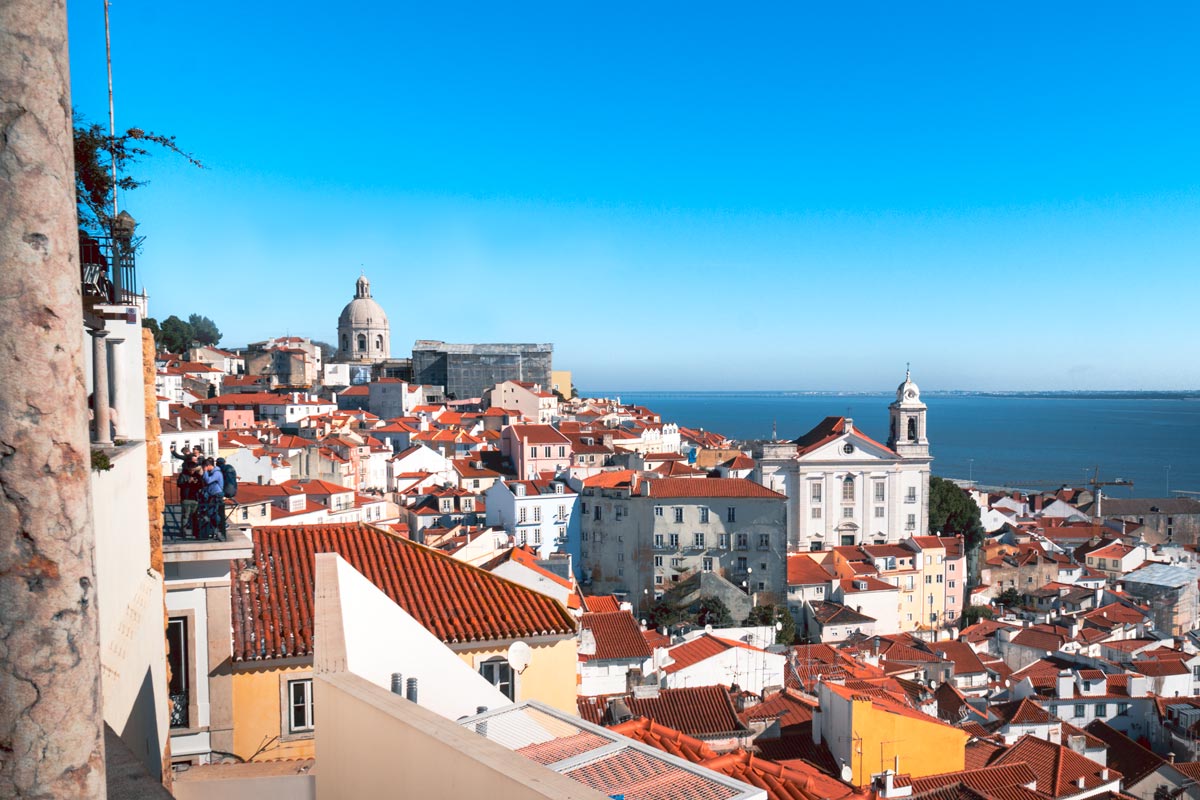
Alfama — Lisbon's Oldest Neighbourhood
Alfama is Lisbon's oldest district, built by the Moors in the 8th century. The streets twist through it like a maze. A map app won't help you here — the alleys are too narrow for satellite coverage, and it's hard to tell a staircase from a lane.
The building walls are covered in azulejos — hand-painted blue ceramic tiles. Some show flowers, some show scenes of the sea. The ones that are chipped and faded, with laundry hanging above them, are somehow the most beautiful. Go early in the morning and you'll have the alleys almost entirely to yourself.
One thing to know: Lisbon's streets are paved with calçada portuguesa, a limestone cobblestone. It gets extremely slippery when wet. Beautiful to look at, but sandals or thin-soled shoes are a genuinely bad idea.
Tram 28 — The Yellow Tram That Runs Through the Alleys
A tram runs through Alfama. The No. 28 yellow tram rattles up through alleys so narrow it nearly brushes the walls on both sides. You've probably seen it in photos — but seeing it in person is different.
You can ride it, or just walk alongside it. The best moment is when it passes in front of the Lisbon Cathedral, built in 1147. A battered yellow tram gliding past a Romanesque cathedral — it's hard not to stop and take a photo.
It's famous for long queues, so early morning is the right call. The tram before the tourists arrive, shared with local residents, is the real Tram 28.
Fado — The Sound That Comes Out of the Alleys at Night
Alfama changes when the sun goes down. During the day it looks like a pretty tourist district. But around 9 PM, fado starts drifting out from somewhere in the alleys.
Fado is Portugal's traditional music — a single voice accompanied by guitar, expressing saudade, a Portuguese word for a kind of longing and melancholy that doesn't translate cleanly into other languages. You don't need to understand the lyrics. Something in it reaches you anyway.
If a tavern door is open a crack, step in. The room will be small and dimly lit. Portuguese audiences listen to fado in silence — applause only comes after the song ends. Just being inside that atmosphere for a while, you feel what Alfama is trying to hold onto.
Lisbon is full of hills, so you'll stumble onto viewpoints without planning to. A miradouro overlooking the Tagus River will stop you, and you'll end up watching the sun go down. That's Alfama — things happen to you without any itinerary. Getting lost in Lisbon isn't a bad thing.
#LisbonTravel #Alfama #LisbonAlleys #Tram28 #Fado #PortugalTravel #LisbonRecommended #AlfamaAlleys #EuropeTravel #TravelEssay