Keywords: Van Gogh, Post-Impressionism | Date: 2026-05-23
After the last post on Impressionism, I promised we'd get into Van Gogh — specifically, why his paint is so thick.
Is it just a style choice, or was there a reason? Today we dig in properly.
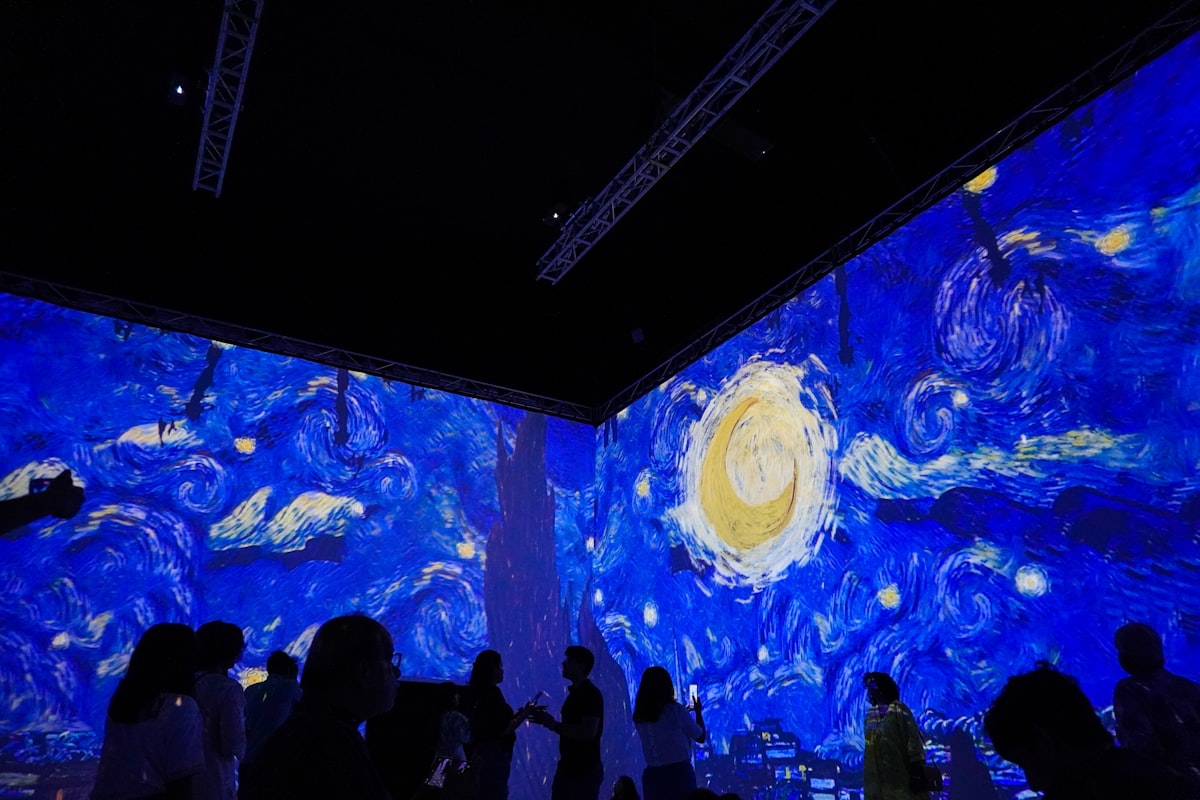
[Image: Van Gogh style painting (Source: Unsplash, free for commercial use)]
How Is It Different from Impressionism?
Van Gogh wasn't an Impressionist. He was a Post-Impressionist. The two look similar but point in different directions.
Impressionism captured what the eye actually sees — light, the moment, faithfully. Van Gogh pushed further: "I'm not painting what I see. I'm painting what I feel."
The sky in a Van Gogh isn't the actual sky color that day. It's the sky as he experienced it emotionally. A wheat field isn't just a wheat field — it's what he felt standing in front of it.
Why So Much Paint? — The Impasto Technique
If you've seen a Van Gogh in person, you'll notice the canvas isn't flat. The paint protrudes like a bas-relief. This is the impasto technique.
Instead of thin, smooth layers, Van Gogh piled paint on with a palette knife or thick brush. The brushstrokes are fully visible — you can see the direction, speed, and force behind each one.
He wanted his emotions to physically exist on the surface. The swirling sky in The Starry Night looks that way because the paint is actually piled up in those swirling directions. You can feel it with your fingers as much as your eyes.
For Van Gogh, Color Was Emotion
Van Gogh didn't use color to represent reality. He exaggerated it to convey feeling.
Yellow meant longing and energy — why the Sunflowers series burns so intensely. Blue meant depth and anxiety. The deep blue of The Starry Night reflects his state of mind when he painted it.
He leaned heavily on complementary contrasts — yellow against violet, blue against orange. Those pairs amplify each other. Van Gogh made the entire painting vibrate.
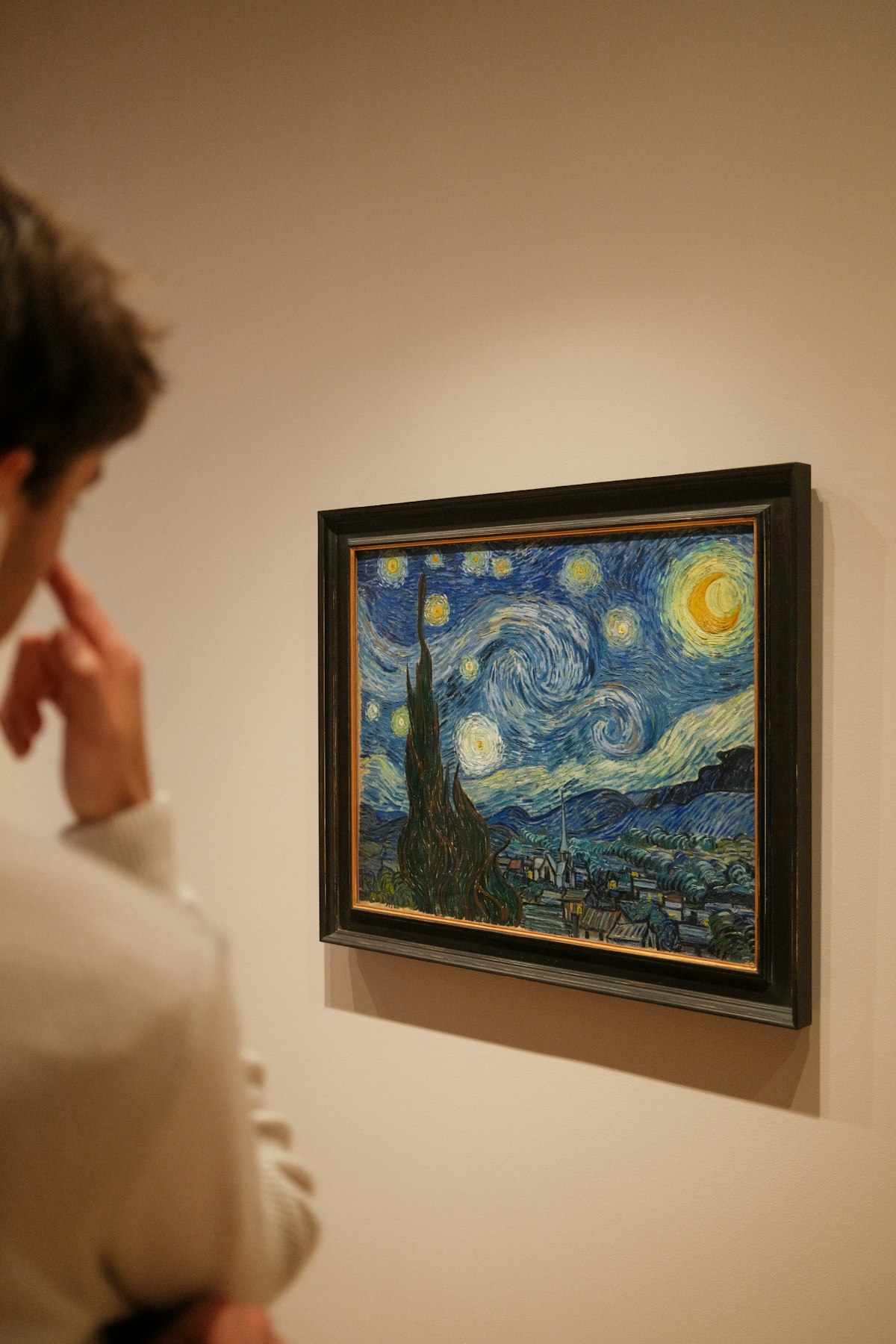
[Image: Van Gogh style artwork (Source: Unsplash, free for commercial use)]
37 Years, Three Final Years of Paintings
Van Gogh died at 37. He didn't start painting seriously until 27. In less than ten years, he produced over 800 oil paintings.
The brightest period was those final three years. In 1888 he moved to Arles, France. He lived with Gauguin, but they clashed badly. In extreme distress, Van Gogh cut off his own ear — one of art history's most infamous episodes.
He checked himself into an asylum. During a year at Saint-Paul-de-Mausole, he painted The Starry Night — out of one of the hardest periods of his life.
Van Gogh sold only one painting while alive. When he died, the world had no idea who he was. Today he is one of the most beloved artists in history.
----------------------------------------
A person trying to leave emotion as something visible and physical. Every brushstroke is a trace of that attempt. Next, let's talk about Cezanne, who shaped Post-Impressionism alongside him.
#VanGogh #PostImpressionism #ImpastoTechnique #StarryNight #VanGoghStyle #Impressionism #ArtHistory #ArtFacts #VincentVanGogh #VanGoghPainting