Istanbul is a city that sits on two continents at once. You already knew that — you read it somewhere. But standing there in person, it lands differently. Take a ferry from Sultanahmet across the Bosphorus, and you walk on two continents in the same day. That's what this is about.
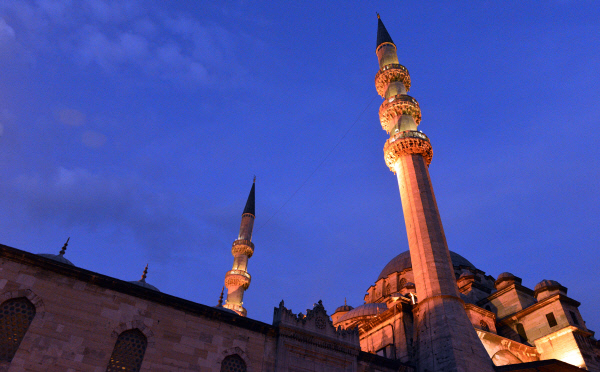
Sultanahmet — Where a Cathedral Became a Mosque, Then a Museum
Hagia Sophia was built in 537 as a cathedral. It stayed that way for nearly a thousand years. When the Ottomans took Constantinople in 1453, it became a mosque. After the Turkish Republic was founded, it became a museum in 1934. In 2020, it became a mosque again. One building, that much history.
Across the square stands the Blue Mosque. When prayer time comes, the call to prayer spreads across the whole plaza. Hagia Sophia and the Blue Mosque facing each other across that square — that's the most compressed version of what Istanbul actually is.
The Grand Bazaar — Open Since 1461
It opened in 1461. A covered indoor market where the lanes split off like a maze once you're inside. Spices, carpets, ceramics, lamps, leather bags — everything. Every shopkeeper calls out directly. You can walk in with no intention of buying anything and lose an hour easily.
Sit down with a glass of black tea at one of the market teahouses, and that's enough. Merchants talking deals at the next table, tourists passing through, a cat walking across a carpet.
The Lanes Under Galata Tower
On the European side, north of the Bosphorus, is the Galata Tower. Built by the Genoese in 1348. In the 17th century, a man named Hezarfen Ahmed Celebi strapped on wings, jumped from this tower, and glided across the Bosphorus all the way to Uskudar on the Asian side. The Sultan reportedly watched it happen and then had him exiled. Being too extraordinary turned out to be dangerous.
The Karakoy neighbourhood below the tower is full of cafes and vintage shops. Ten minutes from Hagia Sophia, completely different atmosphere.

Taking the Ferry to Asia
From Eminonu ferry terminal, it's 20 minutes to Kadikoy on the Asian side. The Sultanahmet skyline shrinks behind you as you cross, the Asian shore growing in front.
Kadikoy is where locals live. Fish stalls and produce vendors line the market lanes. Walking through the mix of bread baking and fish market smell, Istanbul stops feeling like a tourist site and starts feeling like a city that's actually inhabited.
What stays with you about Istanbul isn't really the fact that it spans two continents — it's that Christianity and Islam, Europe and Asia, ancient and present all occupy the same street. You can spend a whole day in one square and still not be sure which continent you're on. Whichever direction you walk, the boundary keeps moving.
Istanbul is the only city in the world that spans two continents. In Sultanahmet, Hagia Sophia has been a cathedral, a mosque, a museum, and a mosque again since 537 AD. The Grand Bazaar has been open since 1461. From the Galata Tower on the European side, a 20-minute ferry gets you to Kadikoy in Asia. It's a city where you walk two continents in a single day.
# IstanbulTravel #TurkeyTravel #HagiaSophia #GrandBazaar #GalataTower #Bosphorus #Sultanahmet #IstanbulAlleys #EuropeTravel #TravelEssay