Everyone knows coffee comes from beans. But where those beans come from, and how they became this particular flavour — that's something most people skip over. When a café menu says "Ethiopia Natural" or "Colombia Washed," it sounds like decoration. It's not. Follow a single cherry from tree to cup and those words start to mean something.
A Coffee Cherry Has Two Seeds Inside
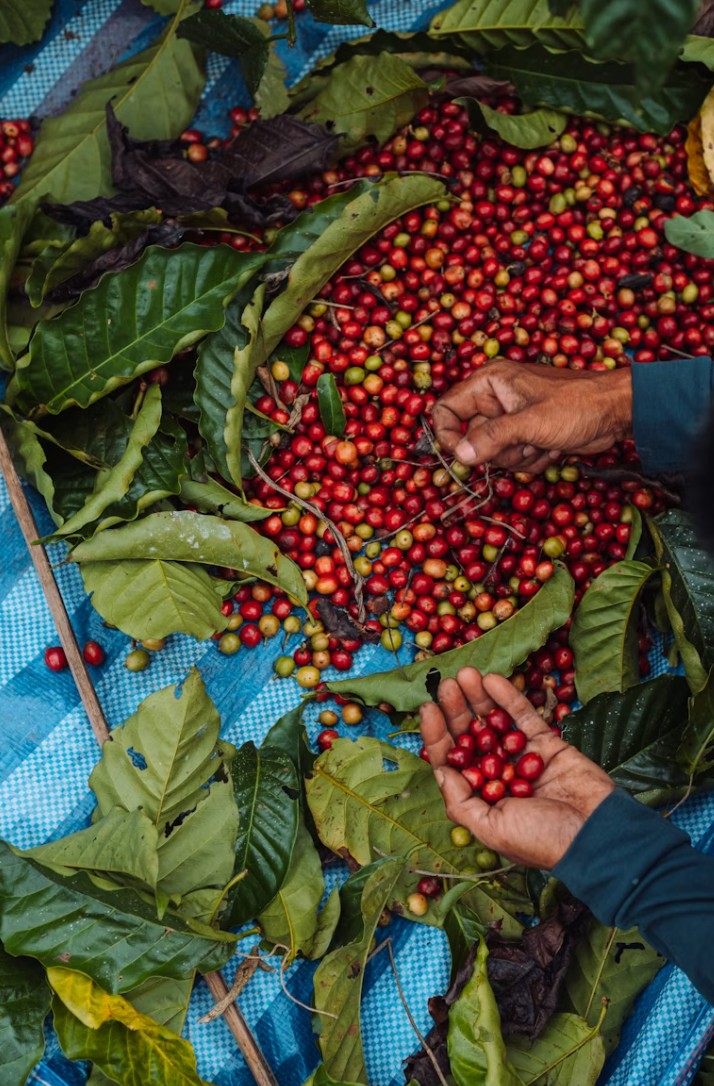
Coffee trees grow small red fruits. They're called coffee cherries — because that's roughly what they look like. Inside each cherry, two seeds sit face to face. Those seeds are the coffee beans. The fruit gets discarded. Only the seeds matter.
How you remove those seeds shapes the flavour. The washed process strips off the fruit pulp first, then ferments and rinses away the remaining sticky mucilage before drying. The result is clean and bright. The natural process skips all that — the whole cherry goes out to dry in the sun, and as it dries, the fruit's sugars seep into the seed. Natural-processed coffees tend to be sweeter, fruitier, and heavier. Same tree, same cherry — just a different method, and the flavour goes somewhere else entirely.
Before Roasting, It Has No Taste or Smell
The processed seeds are called green coffee beans. At this stage they're a pale greenish colour, with almost no aroma and no flavour worth mentioning. Everything we associate with coffee comes from roasting.
Heat the green beans past 160°C and the Maillard reaction kicks in — the beans turn brown and hundreds of flavour and aroma compounds form. In the process, the bean loses about 20% of its weight and expands to about 60% larger. How long and how hot determines the roast level: lighter roasts preserve more of the bean's original fruit character, darker roasts push toward bitterness and body. The roaster is deciding what gets kept and what gets burned off.
The Moment You Grind, the Aroma Starts Leaving

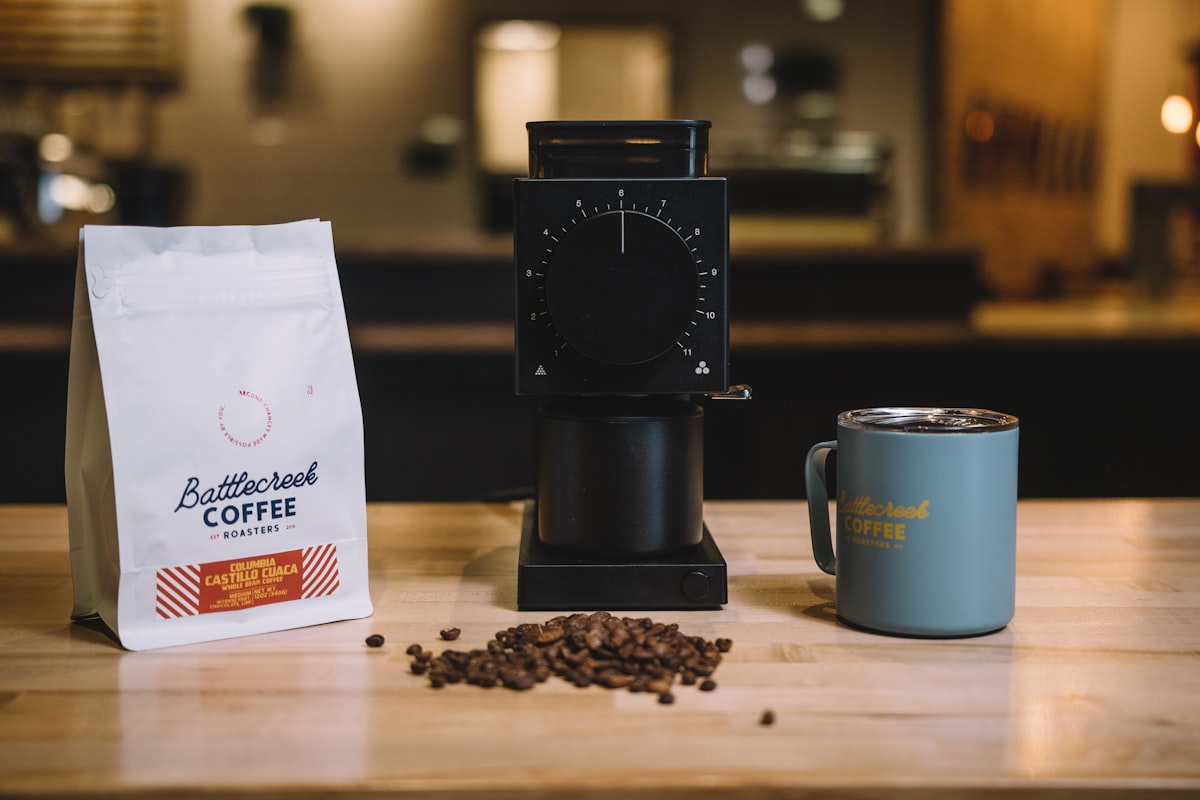
A whole roasted bean holds its flavour better than a ground one. The moment you grind it, the surface area multiplies and the aromatics start escaping fast. That's why cafés grind to order — every second matters after the grinder stops.
Extraction comes down to two things: grind size and water temperature. Coarser grinds let water pass through quickly, pulling less out — lighter, thinner flavour. Finer grinds slow it down and extract more — stronger, more intense. Water temperature should be around 90 to 96°C. Too hot and you over-extract the bitter compounds. Too cool and the aromatics don't come through properly. Thirty seconds of brewing and the whole cup is already decided.
A red fruit becomes two seeds, which get processed and dried, then roasted, then ground, then flooded with hot water for half a minute. The reason washed tastes different from natural, and light roast different from dark — it's all in that chain. Once you know what's happening, the cup reads differently.
Summary
So to put it simply: coffee beans are the seeds of a red fruit called a coffee cherry. Whether those seeds are dried with the fruit on (natural) or washed clean first (washed) shapes the base flavour. Green beans have no taste until roasting triggers the Maillard reaction, creating hundreds of aroma compounds and turning the bean brown. Grinding releases those aromatics fast, so freshly ground is always better. Water temperature and grind size determine the extraction. Each step in the chain is deciding something about what ends up in your cup.
#Coffee #CoffeeBeans #NaturalProcessed #WashedCoffee #Roasting #MaillardReaction #FoodEssay #CoffeeScience #FromBeanToCup #CoffeeCherry